
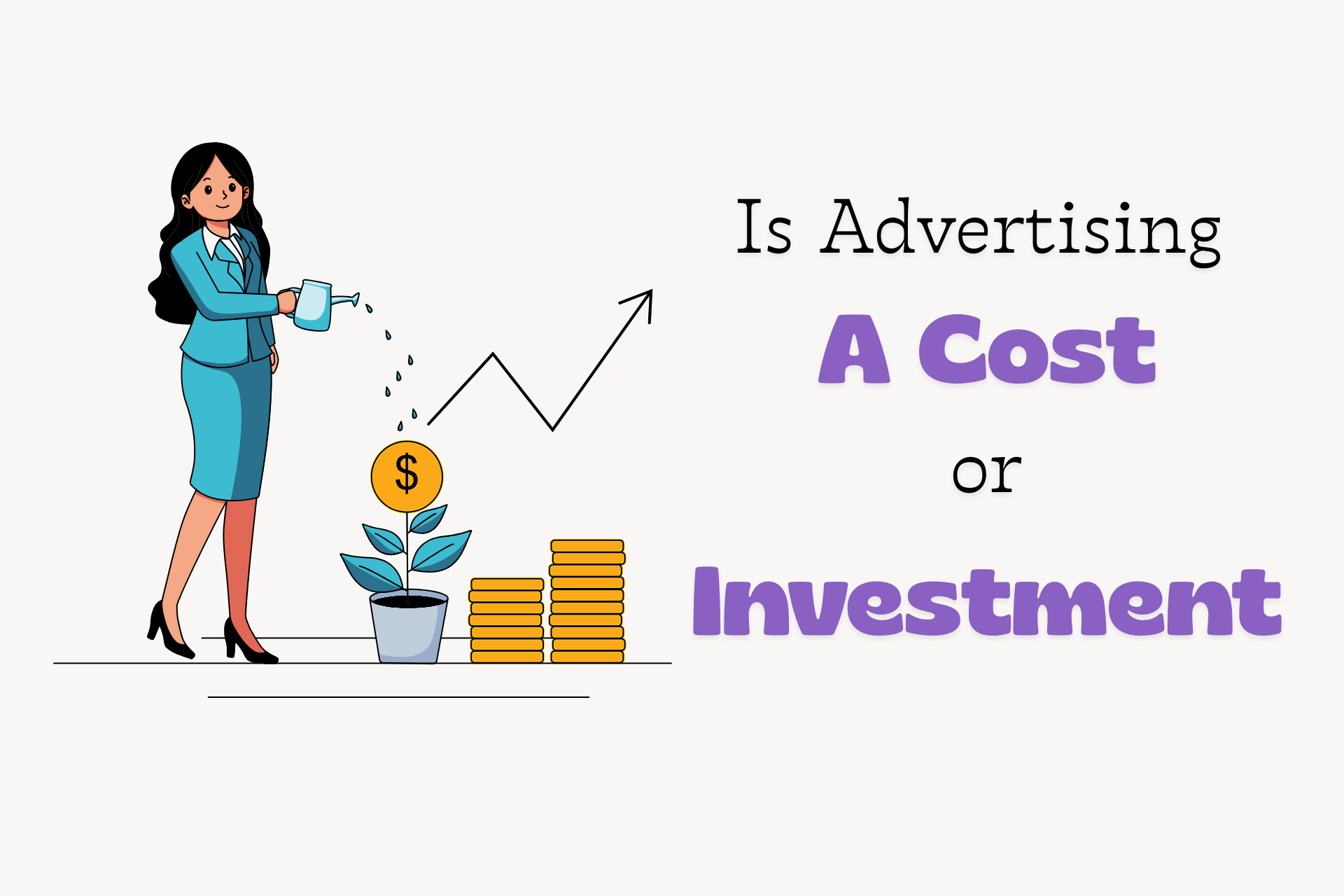
Why Smart Ad Spend Pays Off: Real-World Case Studies That Prove It’s Worth It
In this era of the attention economy, it is very tough for businesses, if not impossible, to stay ahead of the game. Still, businesses often ponder over whether they are spending too much on advertising. Is it worth it?
At face value, it seems that money is going out without a certainty of returns. However, to the businesses asking, “Is advertising money a cost or an investment?” there is a straightforward answer. Advertising might seem like a recurring expense, but when executed strategically, it is a powerful investment that drives growth.
Let’s dive into why—and how real businesses turned things around through smart advertising.
Traditional View: Advertising as a Cost
On the surface, advertising appears as just another line item in the budget. This viewpoint doesn’t consider advertising an essential expense. That means that when times are tough, it is one of the first items to get a budget cut.
However, there is a danger of setting unrealistic targets and keeping in mind only short-term targets. A lot of times advertising becomes a drain on cash flow if ROI is poor. More often than not, this shortsighted approach limits a brand’s growth potential.
On the contrary, strategic advertising is a long-term plan that can transform a company’s growth trajectory.
Strategic View: Advertising as an Investment
Smart advertising is akin to planting seeds for future growth. Strategic ad spending does more than drive traffic—it builds brand equity, generates leads, and scales revenue over time.
- Boost visibility and trust – Smart advertising relies on consistent messaging, which builds recognition and trust. It transcends attention-grabbing tactics and translates into consumer preference over time.
- Drive new customer acquisition – When you perceive advertising as an investment, you are not just pushing your products through an attention-grabbing war; rather, you are trying to expand your customer base. Along with retaining your old customer base, you end up gaining new customers consistently.
- Long-term Benefits – Beyond immediate results, advertising campaigns enhance company image, PR visibility, and word-of-mouth referrals.
- Scalable Momentum – Early successes through smart advertising can be reinvested to expand reach and increase returns even faster.
There have been tons of businesses that turned around their fortunes using smart advertising. Here are a few examples that you can easily relate to.
Case Studies: Transformative Power of Advertising
1. Domino’s “Pizza Turnaround” from criticism to craving
By 2009, Domino’s was under fire. Customers openly disliked their pizza, and sales were sinking. Instead of hiding, Domino’s embraced the criticism in its “Pizza Turnaround” campaign.
They admitted their flaws publicly and overhauled the recipe and ingredients. They documented the process in authentic ads. The results were overwhelming. They got a 14% increase in same-store sales in the next quarter. Meanwhile, there was a significant jump in their share prices.
This was a bold investment in authenticity, transparency, and product quality—resulting in brand restoration.
2. Old Spice’s “Man Your Man Could Smell Like”
Once seen as outdated and irrelevant for young buyers. Old Spice needed reinvention. The 2010 campaign starring Isaiah Mustafa used humor and viral engagement to rebrand.
The campaign resulted in a 107% jump in body wash sales in months. It positioned Old Spice as fun and youthful.
That ad spend was not just a cost—it was a strategic investment in brand repositioning that rejuvenated the brand.
3. Dollar Shave Club—Startup to $1B Exit
Competing with giants like Gillette seemed impossible for a small startup. Dollar Shave Club launched a low-budget but hilariously viral video in 2012 titled “Our Blades Are F***ing Great”.
It resulted in 12,000 subscriptions in 48 hours. Ultimately the brand was acquired by Unilever for $1 billion in 2016. A $4,500 ad built a billion-dollar brand.
4. Nike – “You Can’t Stop Us” During COVID-19
During the pandemic, sports events were canceled, and morale was low. In these times Nike launched the “You Can’t Stop Us” ad campaign—featuring a split-screen edit that visually showed unity across sports, genders, and backgrounds.
These advertisements gained massive global engagement across digital channels. It helped Nike maintain relevance during these times. It strengthened brand loyalty during global uncertainty.
Best Practices to Maximize Advertising ROI
- Set clear strategic objectives. Determine whether your goal is awareness, sales, brand repositioning, or crisis management.
- Use analytics to track and optimize your campaigns. Refine continuously for compounding returns.
- Use data and testing to optimize cost per lead. You can slash your cost per lead significantly by optimizing keywords and landing pages.
- Tell an authentic story. Storytelling builds emotional connection and trust.
- Budget for growth. That means don’t cut ad spend too early.
So, Is Advertising a Cost or an Investment?
Here’s the truth in a nutshell: the most successful companies—Nike, Apple, Airbnb, and Amazon—all treat advertising as a strategic, long-term investment.
| View | Cost | Investment |
|---|---|---|
| Short-term mindset | ✅ | ❌ |
| Long-term value | ❌ | ✅ |
| Growth potential | Limited | Scalable |
| ROI clarity | Unclear | Trackable |
| Impact | Temporary | Compounding |
Final Thoughts
Advertising, when done right, is not just a cost—it’s fuel for your business engine. You’re not spending money; you’re planting seeds for future revenue, trust, and loyalty. While advertising may incur short-term costs, when integrated with business strategy, product innovation, and data-backed optimization, it becomes a multi-stage investment.
👉 Ready to make your advertising work for you?
